AI for medical notes: a practical guide
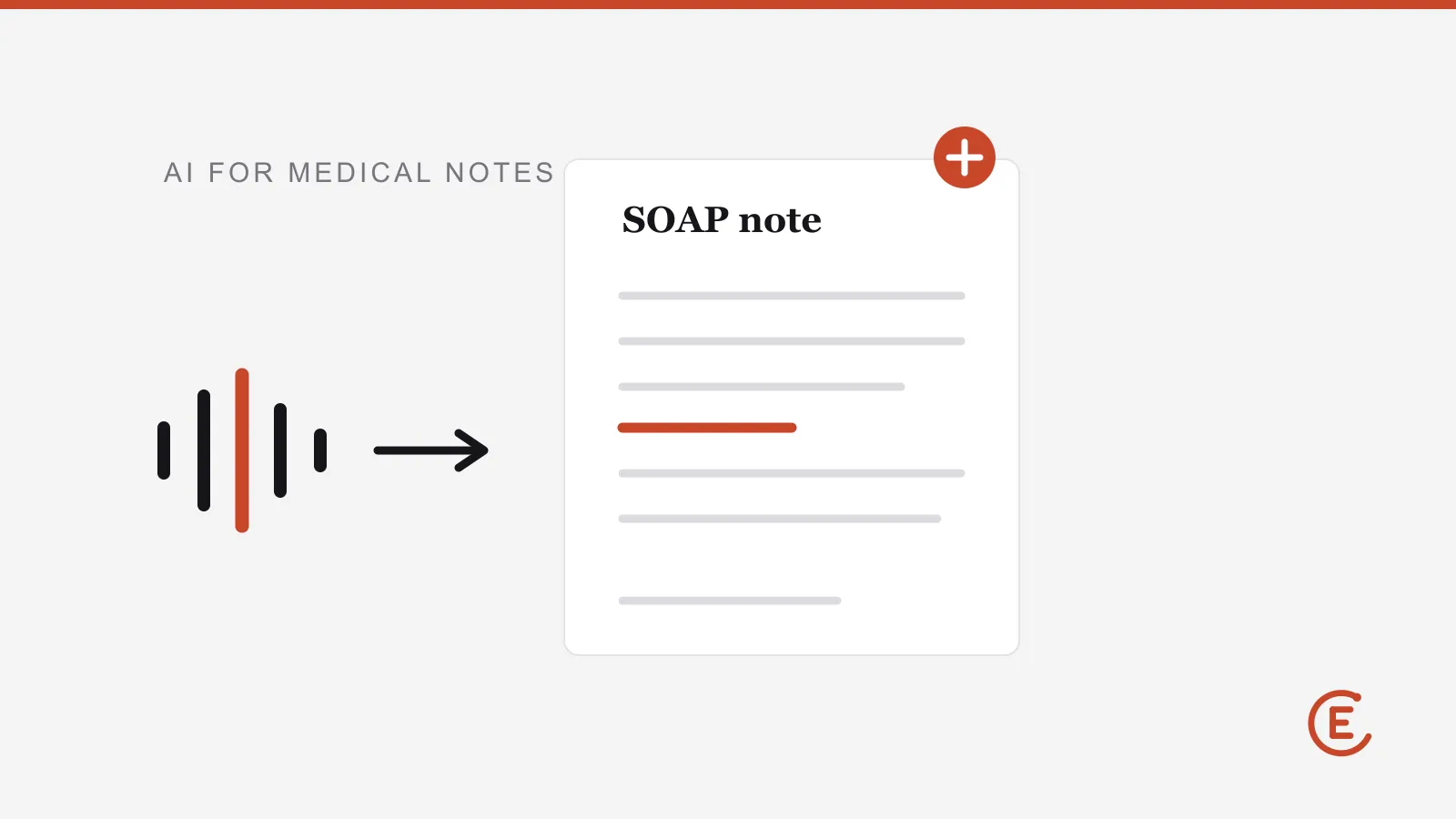
Documentation is one of the biggest time sinks in modern medicine. AI for medical notes promises to hand that time back by turning the conversation in the room into a finished, structured note. Here is how it actually works, and how to tell a real system from a demo.
What “AI for medical notes” means
At its core, it is a pipeline that listens to a clinical encounter and produces the documentation a chart requires. Not a raw transcript, but a structured note: symptoms, findings, assessment and plan, mapped to the fields your EMR expects.
How it works, stage by stage
- Speech-to-text. A clinical-grade model (for example Deepgram Nova-2 Medical) converts audio to text, handling medical terminology, accents and background noise.
- Clinical entity extraction. The system pulls the meaningful entities out of the transcript: symptoms, vitals, medications, instructions.
- Structure and field mapping. Those entities are organized into a SOAP note and the specific forms your workflow uses, so a conversation fills the chart instead of the clinician typing it.
- Confidence scoring and review. Every field carries a confidence score. Uncertain fields are flagged for the clinician rather than silently filled.
What it actually saves
The value is not “transcription,” it is structure and time. A well-built system removes hours of documentation per provider per day, while keeping the clinician as the final reviewer. Done right, the note is ready to check and sign by the time the visit ends.
What to look for
- Grounding and confidence scoring. A note you cannot trust is worse than none. The system should surface uncertainty, not hide it.
- Real clinical speech handling. Generic transcription plateaus on medical terminology. Clinical models are worth the difference.
- EMR-fit output. The best system maps to the exact fields and forms you already use, through a clean integration, not a separate app to learn.
- The human stays in charge. AI removes the typing, not the judgment.
The takeaway
AI for medical notes is not magic transcription; it is a structured pipeline: listen, extract, structure, review. Build it that way, keep the clinician as the reviewer, and it becomes a genuine time-back tool rather than another thing to double-check.
EpochC builds AI documentation systems for healthcare. See our healthcare AI work, or start a project.